By Sushmeeta Ganesh MA
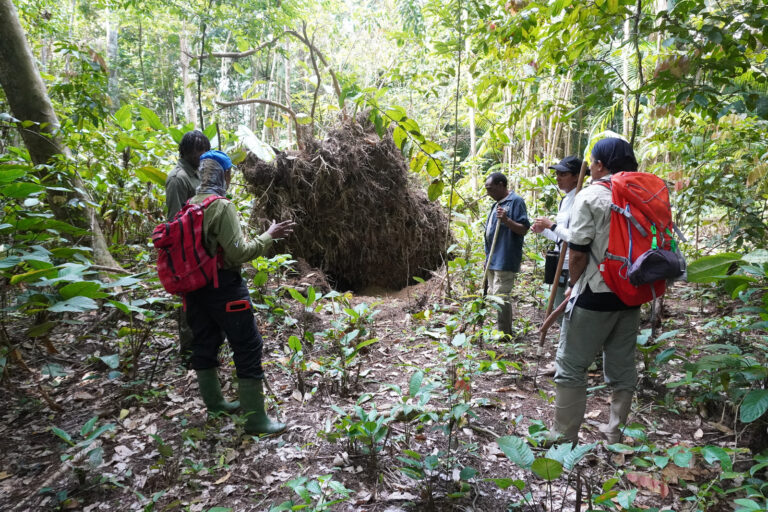
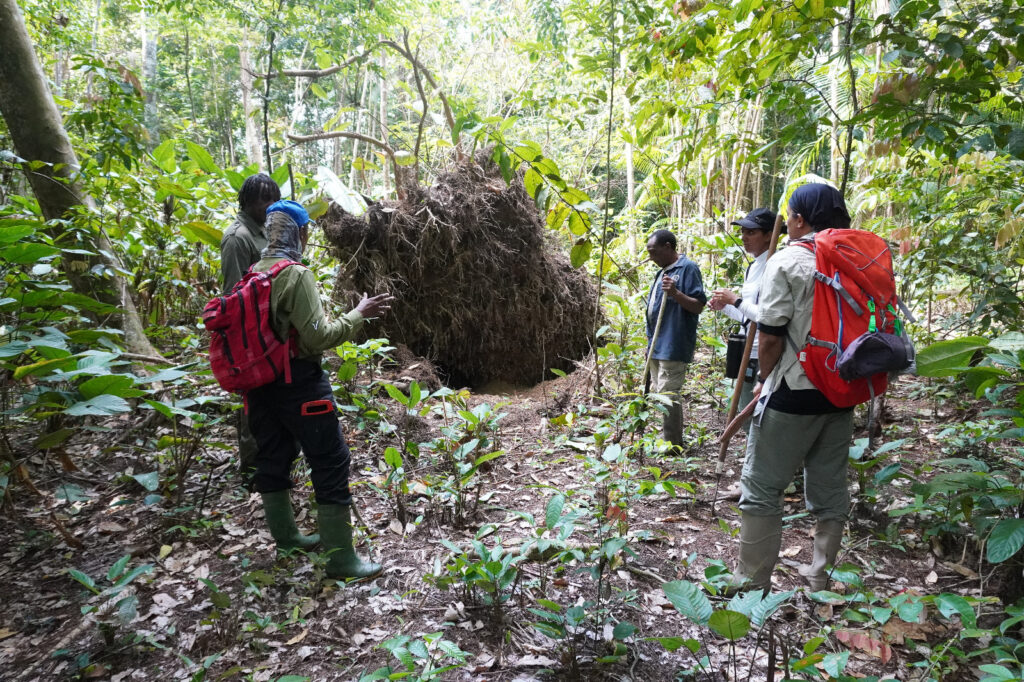
On February 17th, 2026, I visited Plantation Toledo, a former coffee and sugar plantation on the right bank of the Suriname River, for the first time. I learned about Toledo early last year through my mentor, Dr. Cheryl White from the Anton de Kom University of Suriname, who organized a field school with one of her students from the History Department. The goal of the field visit was to carry out a field reconnaissance with Dr. Davide Martino as part of his postdoctoral research on the plantation irrigation systems in Suriname.
Plantation Toledo, referred in literature as Roobank and also known as La Liberté, is among the oldest recorded plantations in Suriname. Toledo began as a coffee estate but shifted to sugar production in the 19th century due to economic challenges. In an effort to increase profitability, the British investor O’Ferral merged Toledo with the northern neighboring plantation, the Nieuwe Rust. Despite new investments, including the installation of a steam mill, Toledo remained one of the least productive sugar plantations (van Stipriaan, 1993: 55; Wong Chung, 2025: 4; Dikland, 2010: 10).
After the abolition of slavery, the history of Toledo took an important turn. The descendants of the formerly enslaved Weegman family legally acquired 117 hectares of the plantation. They lived there for some time and practiced small-scale agriculture. Later, due to limited access to education and other opportunities, the family moved to Paramaribo. However, they retained ownership of the land and continue to see Toledo as a place of memory, cultural identity and heritage (Sarijoen, 2025: 5-7; Wong Chung, 2025: 5).
Overall, academic research had little interest in the tangible history of plantation systems in Suriname. For this reason, Plantation Toledo has scientific potential for historic-archaeological research. Earlier research on Plantation Toledo was carried out by Dikland (2010), Sarijoen (2025) and Wong Chung (2025), who respectively carried out research on the residential and architectural history of the plantation; the historical development of Plantation Toledo; and the water management system and layout of the plantation.
During the recent field visit, I made an interesting observation: did the family Weegman obtain the original Plantation Toledo (Roobank) when they acquired the 117 hectares in the early 20th century or did they obtain Plantation Nieuwe Rust, which was added to Toledo in the 19th century? Furthermore, since the majority of plantations in Suriname were abandoned by the end of the 19th century, is the cultivated plot of land the original plantation or could it be a neighboring plantation?
Archaeological research can help provide a better insight on the above. For example, by applying phytolith analysis, which is a sub-discipline that focuses on the microscopic silica particles formed in plant tissues that remain preserved in the soil long after the plant has decayed (Witteveen, 2024: 1). By taking soil samples from the plantation beds, it can be determined through absolute data whether coffee and sugar were cultivated there. The results of the phytolith analysis would support the family’s ancestorial claims to Plantation Toledo with scientific data. Additionally, soil sampling and archaeological excavations at Feature 1, formerly known as the Ston Futu Island, can also supplement to the historical value of the landscape. Therefore, historic-archaeological research at Plantation Toledo is of great importance.
In the near future, together with Dr. Cheryl White, I will my conduct my own archaeological research at Plantation Toledo. This research will focus on documenting the material remains of the plantation landscape and collecting soil samples for phytolith analysis. By identifying microscopic plant remains preserved in the soil, it may be possible to determine whether coffee and sugar were cultivated on the site. Combined with historical sources, this research will broaden the archaeological value of Plantation Toledo and contribute to a better understanding of its development within the plantation landscape along the Suriname River. Ultimately, this research will also help preserve and honor the history, cultural identity and tangible & intangible heritage of the Weegman legacy.