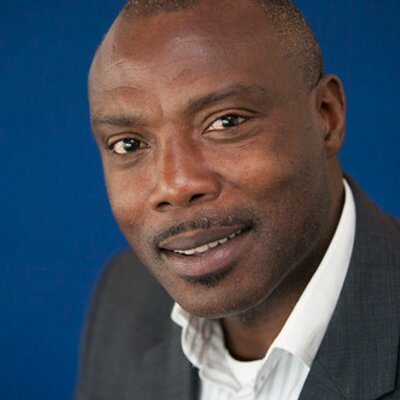

By Hadassah Vorm
Course: Africa & Diaspora Studies
Diaspora, Colonialism and Identity – in relation to transgenerational trauma
The African diaspora, like the Jewish diaspora -the epistemological origin of the term diaspora occupies a prominent place within diaspora studies. The more I learn about slavery and colonialism, the more I recognize how much remains unknown to me, a reality that holds true for most of us.
Once you realize that life is too short to know everything, you can create focus and ensure that you become highly knowledgeable in one specific area. As a BIPOC* intercultural trauma therapist in mental health care, I work both interculturally and with transgenerational sensitivity alongside clients in trauma processing, in order to achieve lasting recovery.
By bringing the unspoken reality into the open and connecting it to everyday clinical work,
I highlight an urgent concern shared by many in the field.
I spoke with several professionals in Suriname, Curaçao, Bonaire, and Aruba. They also work in mental health care and, like me, conduct research in this field alongside their practice. The same patterns are visible there as in the Netherlands.
*Black, Indigenous & People of Color
In June 2025, I visited the ABC islands to deliver professional training and workshops and engaged in consultations with Antillean mental health professionals working across the Caribbean region.
These practitioners emphasized the acute and escalating need for culturally responsive care, noting that the dominant frameworks currently in place, largely grounded in Eurocentric paradigms – fail to adequately address the psychological and emotional realities of the local population.
This discrepancy is historically rooted. Mental health care systems in the region continue to operate within structures established during colonial rule. The institutional models introduced by the colonizer were embedded within colonial administrations and, despite political decolonization, continue to shape contemporary practice in former colonies.
As a result, colonial epistemologies remain deeply interwoven with present-day systems of care.
At the institutional level, the lived experiences of people of color, and particularly experiences of racialized stress, structural inequity, and everyday discrimination, are frequently minimized, invalidated, or reframed in ways that obscure their sociopolitical context.
Such dynamics contribute to epistemic injustice and reinforce systemic blind spots within clinical assessment and treatment approaches.
From my professional standpoint, informed by clinical practice utilizing an intercultural and transgenerational methodological framework, meaningful and sustainable pathways toward healing must be co-constructed within the communities themselves.
Community-embedded knowledge, culturally grounded meaning-making processes, and historically informed perspectives are essential to addressing the depth and urgency of psychological distress.
Moreover, the enduring effects of the colonial strategy of “divide and rule” — institutionally embedded centuries ago – continue to manifest transgenerational in the form of fragmentation, mistrust, and weakened communal cohesion.
In clinical practice, this erosion of trust and unity is both visible and palpable. From a transgenerational trauma perspective, such patterns cannot be understood outside of their historical and structural context.
Such phenomena are apparent in clinical practice and are influenced by multiple factors that can be understood through a transgenerational lens.
It is precisely through collaboration, by genuinely celebrating each other’s success, sharing wealth and abundance, and including others in one’s own achievements, that it becomes
possible to leave the past behind.
When we examine African diasporas, we observe that the term diaspora is often employed in a vague, ahistorical, and uncritical manner. In such usage, various forms of movement and migration, both between and within countries, are included under a broad conceptual umbrella.
However, there is a notable lack of attention to the historical circumstances and lived experiences that shape diasporic communities and their consciousness -or to the implications of their absence.
Dr. Kim D. Butler, Ph. D. (Freedoms Given, Freedoms Won: Afro-Brazilians in Post-Abolition São Paulo and Salvador) a leading historian of the African diaspora in Brazil, argues that ‘conceptualizations of diaspora must be capable of accommodating the reality of multiple identities and the stages of diasporization over time.’
She offers a straightforward and useful framework for diaspora studies, divided into five dimensions:
I. The reasons for and circumstances of dispersal;
II. The relationship with the homeland;
III. The relationship with host countries;
IV. The internal relationships within diasporic groups;
V. A comparative study of different diasporas.
Prof. dr. Robin Cohen (emeritus Professor of Development Studies; former Director of the International Migration Institute, University of Oxford) is a social scientist working in the fields of globalization, migration, and diaspora studies.
Cohen proposes a framework based on what he identifies as nine common characteristics of a diaspora. He also distinguishes different types of diasporas:
a) vdiasporas (Africans & Armenians) b) labor diasporas (Indians) c) imperial diasporas (Britons) d) trading diasporas (Chinese & Lebanese) e) cultural diasporas (Caribbeans)
Gaps are apparent within these categories, demonstrating that diasporas are not entirely discrete. It is also notable that, whereas other diasporas are defined in national, ethnic, or even ideological terms, African diasporas are often generalized under a single label: simply ‘African.’
Describing African diasporas as ‘Black,’ while rarely assigning color labels to diasporas from other regions, raises important considerations.
Beyond the politics of a ‘Black’ identity, the issue is that other diasporas are typically identified by ethnicity, nationality, language, or religion. The homogenization and racialization of Africa
are widespread, in both academic and popular discourses, inside and outside the continent.
Often among those who have little interest in understanding its remarkable diversity, or who seek to impose a liberatory Pan-African solidarity.
Prof. Edward Alpers, Research Professor of History at the University of California, LA (political economy of international trade in precolonial eastern Africa, including cultural dimensions with special attention to the wider world of the Indian Ocean) observes something noteworthy:
The homogenization and racialization of African diasporas is problematic. The islands of the Indian Ocean, which are discussed in some studies, are often geographically classified as African.
From a geographical perspective, the ‘African diaspora’ in this case would constitute an intra-African diaspora, a movement from the continent to the nearby coastal islands.
Hunwick & Powell (The African diaspora in the Mediterranean lands of Islam) express even greater concern regarding the racialized partitioning and reduction of Africa.
The compartmentalization of the continent produces distinct zones that are treated as either
‘the Middle East’ or ‘Africa,’ reflecting a legacy of Orientalism and colonialism.
North Africa, including Egypt, is often considered part of the Middle East, although Middle Eastern specialists generally do not extend their focus further west than Egypt.
Northwest Africa – the Maghreb – is frequently treated as a peripheral region within Middle Eastern studies and largely falls outside the scope of African studies.
Despite its close and enduring historical connections with West Africa, Northwest Africa (from Morocco to Libya) has largely remained outside the attention of most Africana scholars.
The question of what constitutes Africa, and who counts as African, is critical for understanding African diasporas. I adopt the assumption that Africa is a geography, a history, and a material constellation of places.
Ifriqiya, from which Africa is historically derived, originally referred to present-day Tunisia.
The Africa I refer to is the Africa of the African Union (AU) – the 54 states that constitute the continent and its islands. This history is always filtered through the lens of the present, a
context in which numerous intra-diasporic movements have taken place.
Five types of intra-African diasporas can be distinguished:
1. Trading diasporas (e.g., the Hausa and Dioula in West Africa)
2. Slave diasporas (West Africans in North Africa; East Africans on the Indian Ocean islands)
3. Conquest diasporas (e.g., the Nguni in South Africa)
4. Refugee diasporas (such as those resulting from the 19th-century Yoruba wars)
5. Pastoral diasporas (e.g., the Fulani and Somali in the Sahel regions of West and East Africa)
These intra-African diasporas have largely been studied without employing the term diaspora, with the exception of trading and slave diasporas. In comparative histories of global African diasporas, the slave diasporas have received the most attention, largely because they were
often trans-regional and resembled the dominant Atlantic slave diasporas.
The other diasporas should not be overlooked. Historically, they functioned as intermediary nodes, and through them new African diasporas emerged in the 20th century.
In this process, national borders reinforced diasporic identities and incorporated these groups into the circuits of international migration.
Studying Africa’s engagement with its multiple diasporas and the historical conjunctures that have structured Africa’s patterns of integration into the world system gives rise to new lines of inquiry.
Such research will extend beyond existing studies of the Atlantic diaspora and ensure that analysis moves further than the conventional ‘Black Atlantic’ framework. Returning to the struggles experienced by descendants of diaspora victims, many contend with a duality in relation to their own identity and ancestry.
This can sometimes lead to an overcorrection, manifesting as a near-complete denial of one aspect of self.
These urgent and often uncomfortable conversations are frequently painful, even though I facilitate them daily in my clinical practice. Transgenerational trauma exists, yet historically
it has rarely been addressed, let alone spoken about.
Engaging in such conversations can also be challenging for clients, particularly when speaking with a family or household member who may never have participated in therapy themselves.
Yet, when approached within a safe and contained therapeutic environment, these dialogues
are profoundly healing. For many of my clients, this may be the first occasion they are given space to express themselves verbally, emotionally, and culturally.
The transgenerational context of these conversations connects directly to experiences that have been silenced for generations, often tracing back to the legacy of slavery. By making these topics discussable, the initial pathway toward processing and healing is opened.
While this is only the beginning, it is a crucial step toward addressing deeply felt pain and enabling breakthroughs that foster openness, clarity, understanding, and compassion. And
ultimately nurturing hope, transparency, and resilience.
Equally significant is the perspective of descendants of white former colonizers, who often say:
‘This all happened so long ago, I was not personally involved in these acts, and I would never have acted in such a way myself, so I do not feel responsible.’
However, they too must confront this history. If the inhumane legacy of slavery continues to impact descendants of the enslaved, the same applies to the descendants of slave owners and colonizers.
I am reminded of my clients affected by the Toeslagenaffaire, who were systematically disadvantaged and ethnically profiled.
Exclusion or rejection based on skin color, name, or social context occurs daily, in the present, and is precisely what I witness and hear in my practice. I advocate for this shared, harrowing history, which continues to reverberate across all levels of the white system through a persistent blind spot, to be named and addressed directly: respectfully, but firmly.
Descendants of colonizers and slave owners must also engage in this conversation. Behind this horrific past lies a continuing comma, not a full stop – an unresolved presence that remains professionally and personally palpable in the lives of my clients every day.
Traditional solutions Traditional approaches are rooted in the conventional white-dominated system. Since December 2020, the Dutch mental health sector (GGZ) has operated under the National Quality Statute for Mental Health Care (Landelijk Kwaliteitsstatuut GGZ).
This statute outlines how mental health institutions and care providers should organize services and determine who qualifies as the appropriate care provider. However, systemic issues are apparent from the outset.
Recent figures Market mechanisms do not stimulate alternative, culturally sensitive entry points into mental health care, and the mismatch between provider and client in this sector exacerbates clients’ difficulties.
According to the most recent figures, in December 2023 there were 97,450 people on waiting lists in the Netherlands. In over half of these cases (56.8%), the wait time exceeded the established maximum acceptable threshold of fourteen weeks (Dutch Healthcare Authority, 2024).
Forgoing treatment These long waiting lists constitute a significant barrier for seeking help with mental health problems for both young and older populations (Leijdesdorff et al., 2021; Polacsek et al., 2019).
When individuals attempt to access care, extended wait times for an initial consultation are often a decisive factor in choosing to forgo treatment altogether (Krendl & Lorenzo-Luaces, 2022; Leijdesdorff et al., 2021; Rens et al., 2020; Ruesch et al., 2017; Wang et al., 2023).
Exacerbation of symptoms Waiting does not appear to heal psychological wounds. Meta-analyses examining the development of depressive symptoms and social anxiety disorders among waitlisted individuals concluded that no improvement occurs during the waiting period (Furukawa et al., 2014; Steinert et al., 2017). Multiple studies further indicate that patients may experience worsening symptoms while on waiting lists (Bureau Lenz, 2023; Cuijpers et al., 2021; Dijk et al., 2023; Jennings et al., 2023; Leijdesdorff et al., 2021; Punton et al., 2022; Reichert & Jacobs, 2018; Rens et al., 2020; Samartzis & Talias, 2019; Stichting FWG, 2023; Yang et al., 2022).
Migration Patterns in the Atlantic World Historical studies examining the migration patterns of Africans and their descendants in the Atlantic world have primarily focused on forced migration during the transatlantic slave trade or on systems of indentured labor in the post-abolition period.
Until recently, comparatively little attention has been given to migration patterns from west to east, and there is limited knowledge regarding voluntary migration of people of African descent within the Atlantic world during the eighteenth and nineteenth centuries.
During this period, Black individuals migrated voluntarily across various parts of the Atlantic world. Some research has explored the ‘Back to Africa’ movement in the nineteenth century, particularly the emigration to Liberia supported by the American Colonization Society, as well as migration of Black people from the New World to Sierra Leone.
The first immigrants to settle in the colony were poor Black people, individuals who had remained loyal to the British during the American Revolution and had been transported to England, before establishing themselves in Africa in 1787.
These impoverished men and women were depicted as vagrants and considered undesirable by much of British society. Humanitarians such as William Wilberforce (1759–1833) and Granville Sharp (1735–1813) believed that a return to Africa would improve their living conditions.
Ironically, they argued that Afro-American colonists would bring the democratic ideals of freedom and equality, which could have a destabilizing effect on the Black population already residing in the colony.