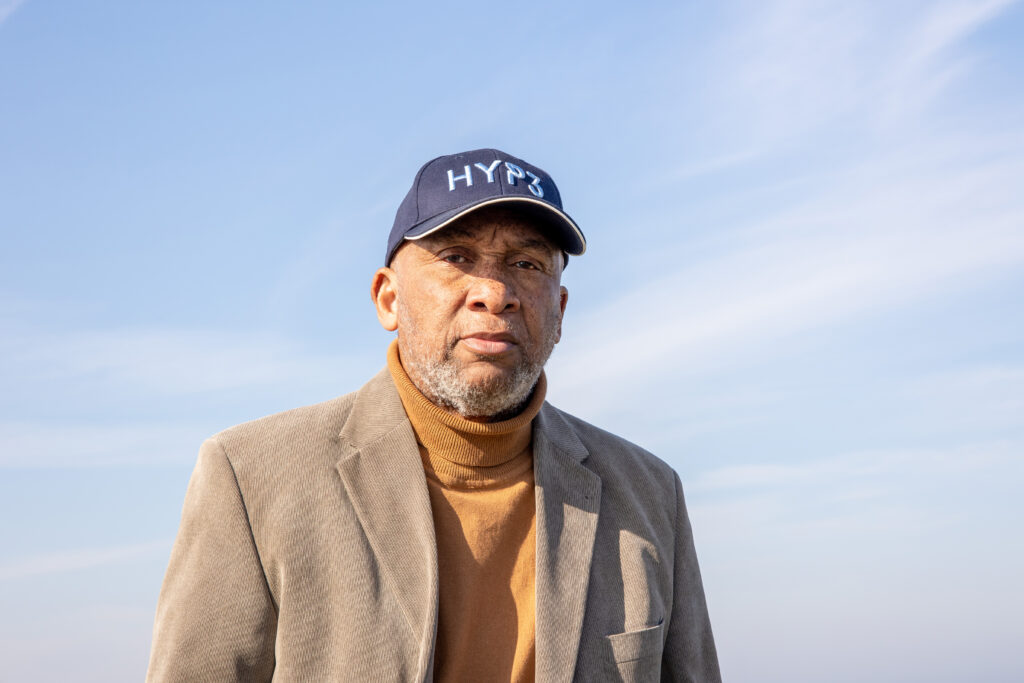
By Waldy Neijhorst
Srefidensi
November 25, 1975 – November 25, 2025
This is the day Suriname became independent fifty years ago. And it is no coincidence that exactly on this day, Tuesday November 25, 2025, I am able to submit my paper after an enriching course taught by Dr. Adwoa Owusuaa Bobie in collaboration with the BROOS Institute African Studies Short Course Outline.
The Development and Autonomy from Boy to Man
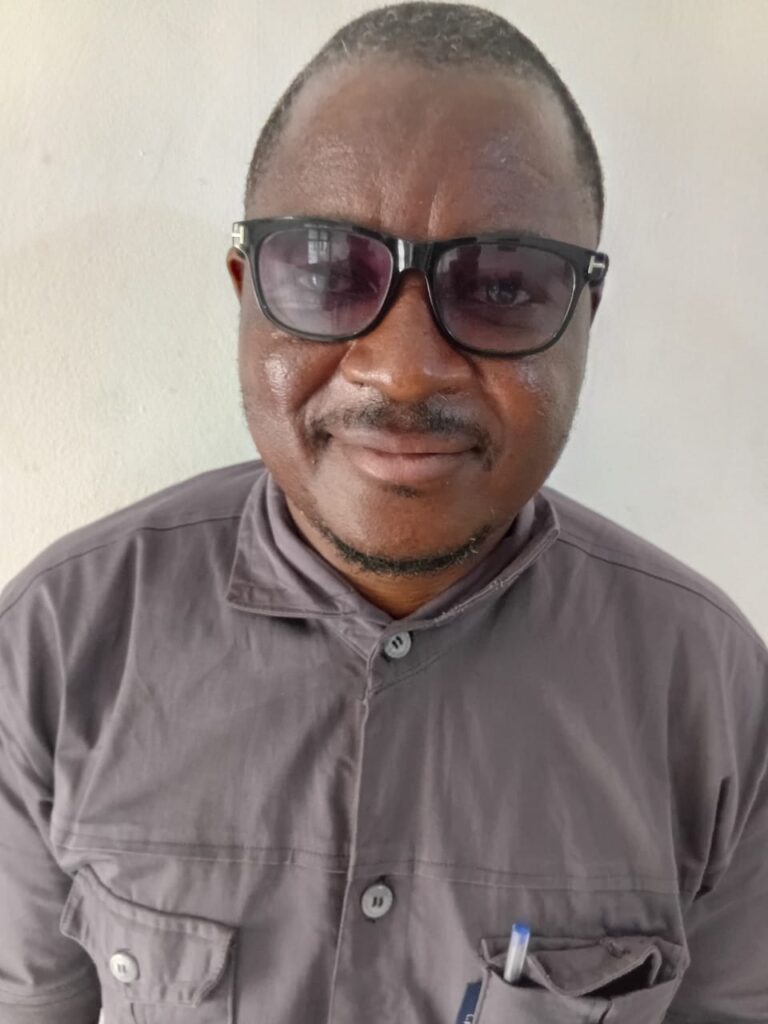
My name is Waldy Neijhorst, and I take you with me on my personal journey through diaspora, identity, and fatherhood.
My Role as Father and Grandfather
I am the father of two children and the grandfather of two grandchildren. That last title, grandfather, I carry with pride. For me, the “O” in opa (grandfather) stands for unconditional: unconditional involvement, presence, and responsibility for the generations after me. This attitude keeps me creative, innovative, and always connected to the entirety of my family system.
My System of Origin: Curaçao, Suriname, and the Double Perspective
I grew up in Curaçao. My father worked at Shell and was a man of discipline, authority, and clear boundaries. When I was thirteen, we moved to Suriname, the country of my parents. There I learned to navigate two opposing parenting styles: an authoritarian father and an understanding mother. This upbringing caused me, as a young man, to avoid confrontation and often not express an opinion. Avoiding confrontation brought peace, and within that peace I could express and develop my creativity. That creativity strengthened my skills and autonomy.
My father used to say, “If you don’t listen, you get beaten out of love.” As a boy I could not understand how beating and love could coexist. My mother, on the other hand, was my refuge. She was wise, gentle, and full of expressions that I only came to fully understand later as a man, partner, father, and grandfather.
Colonial Thinking in Parenting
My father was trapped in colonial patterns of thinking without being aware of it. He often said that sports were for “stupid people,” referring to white people as intelligent because of their academic pursuits, and Hindustanis as forward-thinking because of agriculture. These statements undermined my athletic talent and shook my self-confidence. Who was I? What could I do? Where was I allowed to go?
The African Diaspora as the Framework of My Life Story
Looking back, I can see how my personal history is interwoven with the African diaspora. According to Mazrui, colonialism ironically laid the foundation for African solidarity. Where European powers divided to rule, their domination created an awareness of a shared fate. I recognize this awareness in the colonial echoes my father unknowingly passed down.
From my mother I learned the strategy of invisibility: “Never show all your knowledge and skills. Stay invisible and you will be left alone.” Her advice was a survival mechanism, developed when she migrated to Curaçao as a young woman. I too used invisibility as protection, while continuing to learn, grow, and study.
I now also realize that my mother’s grandfather was an escaped enslaved man. He could read and write. Through that knowledge, he was able to buy land and divide it among his wives and family members. I understood that one of the conditions was that it should not be spoken about openly.
Diaspora Theory as a Mirror
Theories such as Double Consciousness (Du Bois), The Black Atlantic (Gilroy), and the recognition of the diaspora as the sixth region (Edozie) gave language to the feeling of living between worlds. My trip to Ghana in April 2025 became a moment of homecoming, in which I felt that my identity reached far beyond the Western context. I was not the “Black man” as seen in Europe, but a son of the continent; an experience linked to the Door of Return and the River of Our Ancestors.
That feeling encouraged me to further explore the behaviors of Black men. It clearly shows how the diaspora contributes to the spread of African art, music, religion, and identity. Cultural expression acts as a bridge between the diaspora and the continent, where mutual recognition and solidarity are central.
From Father to Therapist
As a therapist, I now guide fathers who struggle with authority, silence, hardness, and intergenerational trauma. In my workshops I teach them that a father does not need to dominate: listening is strength. Many fathers carry colonial parenting patterns, such as punishment and reward rooted in fear and control.
In my work as a psychomotor therapist (PMT), I provide emotional training for boys, work with fathers, and support men and women in improving their relationships. The education strengthened and confirmed that this is my contribution to the community. Despite the language barrier that sometimes kept me from actively participating in class discussions, I learned through attentive listening. Again, I see how the upbringing of “be invisible” reappears.
Diaspora in Motion: An Example of Dignity
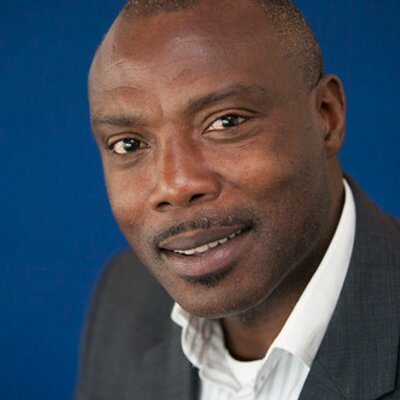
The story of Dean Gorré, a football coach from the Afro-Caribbean region, is a powerful example of diaspora in action. He brought Surinamese and Antillean football to an international level four years ago, creating unity, pride, and economic growth. This demonstrates how diaspora experiences can lead to new forms of dignity and restoration. Dignity ensures clarity in what you do and what you want.
Zeleza argues that the African diaspora is not a singular entity, but a dynamic network of historical, cultural, and economic connections. He distinguishes between “old” diasporas (formed through slavery and colonial displacement) and “new” diasporas (shaped by modern migration, globalization, and economic mobility). According to him, diaspora is both a process and an identity shaped by memory, mobility, and cultural exchange.
Dean Gorré’s work reflects what Zeleza describes. The African diaspora is constantly evolving. It is not a closed story, but a dynamic process of memory, migration, and redefinition. Broadening the perspective beyond the Black Atlantic creates space for a global and inclusive vision of African connectedness. The diaspora is not merely a legacy of the past but a living network shaping the future.
My Growth Within the African Diaspora
Edozie states that the sixth region symbolizes spiritual and cultural homecoming. The BROOS Institute African Studies program taught me to dare and to continue the work I do in the community. Attending the lectures was challenging because of my limited command of the English language, which made me hesitant to join discussions. This forced me to listen more sharply, allowing me to absorb a great deal from the literature.
Studying this literature raises important questions: Where do we go from here? How do we come together? How do we suppress discrimination within our own systems? The first step is to be the change myself by continuing my work as a therapist. By offering themes such as communication, male participation, and “from boy to man,” I contribute to healing and unity.
From Identity to Dignity
Mazrui emphasizes that dignity is central in the African pursuit. Whether protective, restorative, or assertive dignity, it ultimately comes down to the recognition of humanity. His statement “We are all Africans and ultimately: we are all men” touches the core of connectedness.
The text by Rita Kiki Edozie gave me recognition of the African diaspora. Recognizing the diaspora as the sixth region taught me that it is not bound to a specific geographical place it refers to Africans who are dispersed around the world. This means that not only Africans on the continent, but also Africans outside Africa, are part of the Pan-African project.
The many confrontations I encountered in my work and my own traumas and pains led me to decide to travel to Ghana. I was also inspired by bioenergetics, which explains how unprocessed experiences become lodged in the body and create physical blockages. Although my physical pains did not disappear, and I did not seek treatment, the trip gave me something far deeper than physical relief: a sense of homecoming.
In Ghana, I was no longer a “Black man in the Western context,” but a member of the community. That experience directly reflects what diaspora means: living between worlds, shaped by history, yet connected to a shared source. My body recognized what my mind only later understood — that I am part of a larger network of African descendants in which pain, strength, and dignity have been passed through generations.
The moment of homecoming was a masterful experience for me. It gave meaning to my personal journey and helped me feel how my own traumas are embedded in a broader diaspora story of loss, resilience, and healing.
George Shepperson studied the historical development of Pan-Africanism as a political, cultural, and intellectual phenomenon. The roots of Pan-Africanism lie in the experiences of slavery, racism, and diaspora. Africans brought to Europe and the Americas developed a shared sense of identity and solidarity that later formed the basis for political movements. The term “Pan-African” was first used in the 19th century by religious and missionary organizations promoting African independence and self-awareness.
Pan-Africanism remains an ongoing search for connectedness, dignity, and collective restoration, requiring collaboration and engagement. This is my journey and passion in working with men. I am Western-trained, but the ingredients of my training offerings are often infused with the intuition and lived experience of my Black awareness.
My Training Offering
In my training, feeling is central. I believe the body always speaks to us, even when words are absent or when we are not used to giving emotions space. The history of slavery and colonization has left deep traces in how women and men relate to their bodies. Women learned to swallow their boundaries and silence their voices. Men learned to be hard, to carry, to remain silent. Both patterns cause us to survive rather than truly live.
In my work, I help people return to their bodies: to listen to what it tells them, to recognize tension, and to make space for emotion. In that process of feeling, healing, strength, and self-determination arise for them and the generations to come.
To restore harmony within families, I believe each family member must look at their own inner pain. My role is to make people aware of their personal struggles, offer insight into what is happening within them, and when necessary guide them toward specialized support.
Recognizing body signals such as tension, blockages, avoidance, and restlessness is essential in my training, because these signals form the first gateway to awareness and change. The body becomes their compass. By taking these signals seriously, curiosity arises about the origins of behaviors that disturb family harmony, such as aggression, outbursts, or unacceptable patterns.
Sometimes the cause lies in deeper dynamics, such as parental alienation syndrome (PAS), where children are caught between parents and become loyal to one side. Whatever term is used parental alienation, estrangement, or the “programmed child” it affects the entire family system. Through awareness and body-oriented work, space is created for change, gentleness, and healing. That is where my guidance begins.
My Srefidensi
My journey through diaspora, upbringing, and fatherhood has taught me that my personal history is part of a much larger story. The voices of my parents, the colonial echoes in my upbringing, the strategy of invisibility, and the search for my place as a Black man have shaped me. My trip to Ghana brought a turning point: there I felt homecoming, dignity, and connection to the continent that has always lived within me.
The theories of Du Bois, Gilroy, Mazrui, and Edozie give language to what I have felt my entire life: living between worlds while being carried by a shared heritage. I see how intergenerational pain, silence, hardness, and colonial patterns still affect men, women, and families.
That is why feeling is central in my training. The body speaks where words often cannot. When people learn to recognize their signals, space is created for healing, change, and the restoration of dignity.
Everything I have experienced as a boy, father, grandfather, and therapist forms my contribution to my community.
Srefidensi, to me, means taking responsibility for your story, returning to yourself, and consciously contributing to the healing of the generations that follow.