

By dr. Adwoa Bobie
One question that is often raised at the mention of wax print as an African fabric is the question of authenticity. How can a fabric produced mainly outside the continent be claimed by the continent? Within the value chain of wax print, Africans are perceived as just consumers, while all other processes leading to consumption are credited to Europe or Asia. In this short paper, I show Africa’s agency and significant contribution to the production and consumption of wax prints. I show how Africans influenced and continue to influence the designs, distribution, marketing, and consumption of wax prints. Africans are co-creators of wax print fabric.
Africa’s contact with Europeans in the 17th century started off as trade, where cloth was a prominent commodity. The Dutch were among the first Europeans to trade with wax print in West Africa. Having colonised Indonisian Island of Java, the Dutch got involved in Java batik production and trade (Hemmings, 2025). Jessica Hemmings (2025) discusses how the Dutch used incarcerated women in Java prisons to produce textiles, which they sold in Europe. When the Dutch arrived at the West African Coast, they realised the expansive cloth trade within Africa and between Africa and the East. They capitalized on this trade to introduce the Javanese batik to West Africa and Central Africa. This period also coincided with the period of industrial revolution in Europe, where the mechanisation of textile production became an integral part of the revolution. Other countries, especially the British and later the Swiss, joined the African wax print trade.
The African consumer was not an easy market target. With a long historical background of cloth production, Europeans had to learn to please the African. The wax print trade was not a one-sided relationship where manufacturers decided on their products without considering the input of consumers. Steiner’s work (1985) shows the dual supply-demand relationship that characterised the Euro-African textile trade and the agency of African consumers in shaping the quality, designs, and pricing of these textiles. It is this relationship that grew and has sustained the business of the European textile trade, and the same relationship that led to the adoption of these textiles as African prints.
In terms of quality, African consumers demanded high-quality fabrics from the European merchants. Before trading with Europeans in textiles, societies such as the Asante, Ewe, Yoruba, and Igbo were producing fabrics from cotton and demanded a certain quality from the fabrics they produced. The Northern parts of Nigeria, Ghana, the Senegambia, and the Sahel region, which had received earlier exposure through Eastern trade and the conversion to Islam, already had fabrics that suited their weather and clothes. The quality of the cotton weave, the fastness of the dye, and the laundry abilities were key features that African consumers looked for in European textiles. The need for quality was key if the European merchants were to succeed on the African market and thus, Governor Alfred Malooney of Nigeria is recorded to have written to a Manchester manufacturer in 1885, indicating that “quality, substantiality, and durability” were all “conditions that should weigh heavily with home manufacturers if they aim at replacing this native [weaving] industry” (Johnson 1974:181-82 cited in Steiner, 1985). The two most prominent textile companies were the Dutch Vlisco Company and the English A. Brunnschweiler & Company Ltd (ABC from Manchester). In an effort to meet the African quality and win over the African market of textiles, there ensued about 30 years of trade war between dealers in Manchester cloth and those from the East Indies, the Dutch (Gott, 2009).
Gott (2009), citing Nielsen (1979), states that “by the end of these thirty years, Manchester’s coarse, dull [colored] linen cloth had been significantly modified to suit West African consumers’ preference for the lighter weight, brightly [colored] East Indian cottons” (pp. 150). Steiner (1985) also records that the textiles manufactured by the French, which the French perceived as of higher quality than the English textiles was mostly traded in French territories. It did not gain much traction in Anglophone West Africa because of the price difference. Generally, the Dutch wax fabric was the favourite in most West African countries.
The amenability and lightness of European cloth were some characteristics that won the West African market over. Consumers checked for the quality and fastness of the dye by sucking on the bottom of the fabric and then rubbing with their fingers. If the dye faded, it meant that the fastness was low, and for the strength of the cotton weave, sucking on it would reveal the weakness of the cloth. Another act of agency on the part of Africans in the manufacturing and marketing of the fabric was in design. The manufacturers relied on the fashion taste of consumers in making their products; designs and colours were different from one country to another. Nielsen identifies eight sources which informed European manufacturers of their designs for the African market “(1) Indian cottons; (2) Javanese batiks; (3) European prints; (4) African indigenous cloth; (5) traditional African objects and symbols; (6) historical events, current events, political figures and ideas; (7) natural forms; and (8) geometrical designs (Nielsen 1979:482-484). It can be observed that out of the eight, most of them are from the African context, emanating directly from the consumers’ environment. Manufacturers observed that consumers responded better to designs they identified within their context. Though the gateway for textile trade in West Africa was the Gold Coast (Axelson, 2012), with time, European manufacturers were “well aware of regional preferences… to which they paid careful attention” (Spencer 1982 cited in Steiner, 1985:92). Therefore, different countries were treated to different colours and designs of textiles that resonated with the indigenes.
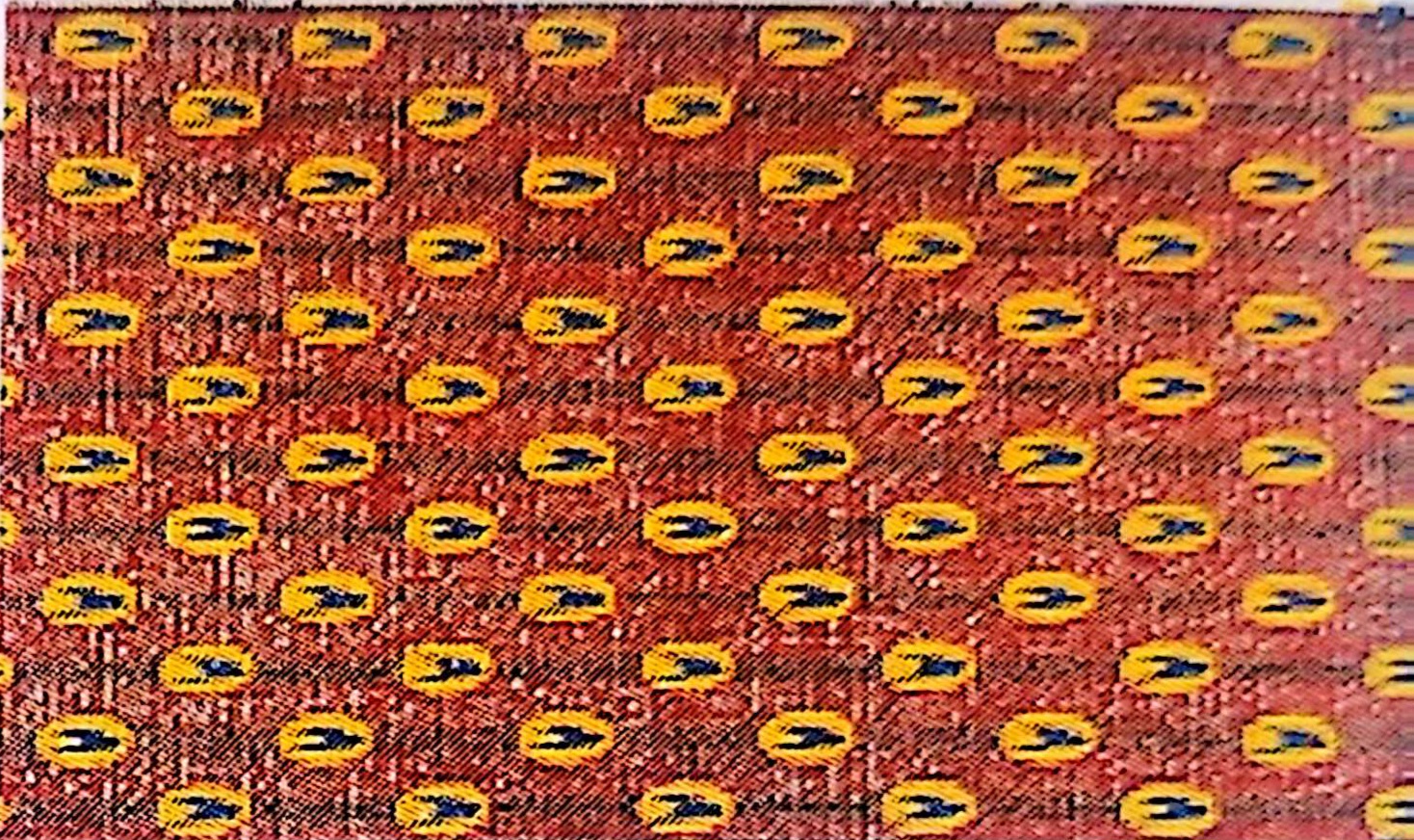
Another African agency was through naming. In many African societies like the Asante, Yoruba, and Igbos, cloth is personified, treated as a social being that exists, hence the naming of cloth. My research among Asantes reveals that, when a weaver makes a cloth, it is first presented to the chief of the society, and when it is accepted, it is named as a form of initiation. This same social acceptance was extended to fabrics introduced to African societies to indicate their acceptance in the society. Figures 1 to 3 are some of the common designs with their local names in Ghana. Akinyemi (2006) discusses some popular and prominent cloths that were given local names in Yoruba, such as ‘Alakete’, ‘Osubamba’, ‘Osupaeleso’ Igbanlahun’, all of which are also names of designs on Adire cloths of the Yorubas” (cited in Oyedele and Babatunde, 2013:167).
Figure 1: Praye (Broom). Source: Author
Figure 2: Gramophone (gramophone). Source: Author
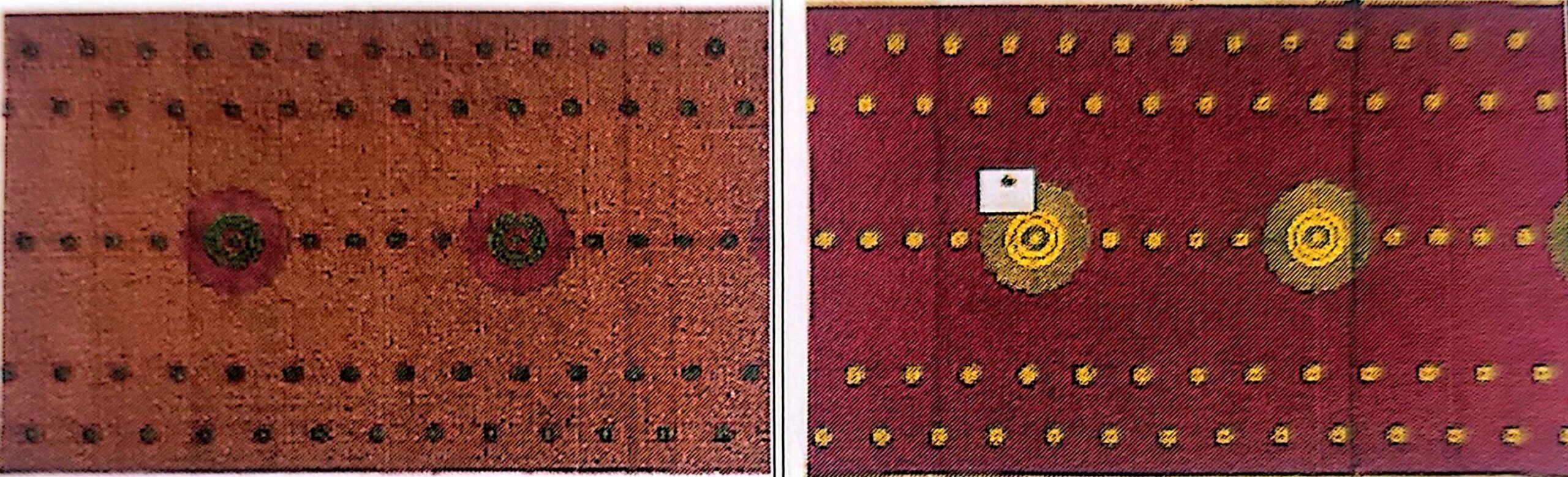
Figure 3: Sika wo ntaban (money has wings). Source: Author
These clothes became integrated into the social, cultural, economic, and political aspects of African societies. There has always been an indigenous influence in the appropriation of these European clothes in African societies. The sewing of wax-print for clothes was fashioned as a hybrid of the European blouse and local wrapper style. It is a “combined local one or two-piece wrappers with a European-inspired tailored blouse—a hybrid ensemble…. In Ghana, this…is known as kaba and slit, in Côte d’Ivoire as trois pagnes, in Senegal as pagne/marinièe. In Nigeria as iro and buba” (Gott et al., 2017: 45). The word Kaba is believed to originate from “West Africa as a coastal pidgin trade language as [a] local version of the English word cover” Gott, 2010:13). This three-piece ensemble can all be in the wax-print cloth, however, there are cases where two-pieces of the skirt and cloth are of the wax-print and the blouse is made of European cloth. While the former is common among many African societies like the Yoruba people of Abeokuta (Byfield, 2004) and the Asantes of Ghana (Gott, 2009) as one of many ways of dressing (Byfield, 2004), the latter was adopted as an ethnic apparel by a few other societies such as the Frafra of northern Ghana where women wore European blouses on top of the two-piece wax print ensemble (Cardinall, 1920) and the Nembe people of south west Nigeria among the Ijo ethnic group (Sumberg, 1995).
During the struggle for independence, nationalists sought for a redefinition of dress from the European to the indigenous because they believed “the elimination of European dress as a first important step in bringing about a gradual independence from European customs” (Byfield, 2004:34). At this period, wax-print cloth was considered among the ‘traditional’ cloths that were adopted in protest of European clothes. Since the cloth came to reflect the self-identity and self-definition of the African people, after independence, governments set up wax-print and non-wax print manufacturing companies that brought cheaper versions to the market, further indigenising the cloth. This made wax prints more accessible and affordable to African. These factories, besides their production, received commissioned production from market women and institutions. The factories worked with local design teams who were either employed at the institution or designers from local educational institutions. Market women who commissioned production in bulk could also come in with their own designs. The tradition of naming wax print textile designs before production continued.
In contemporary times, some of these factories co-exist with European-produced wax print textiles, and Chninese produced wax print textiles. The downside of the Chinese importation has been the tough competition it presents, as their textiles are relatively more affordable compared to locally produced textiles. However, Africa’s influence in the production process has not diminished; if anything, it has increased. Wax prints produced in China are mostly commissioned by Africans who control the design, volume of production, and marketing. Wax print, after its introduction to the African society, evolved from an economic commodity to a socio-cultural symbol. Its trade was shaped by the taste and social milieu of the different African societies. Africans have never been passive consumers of wax prints but active, co-producers of the fabric since its introduction.
References
Axelson, Linn. (2012). Making Border: Engaging the Threat of Chinese Textiles in Ghana. Stockholm: ActaUniversitatisStockholmiensis
Byfield, Judith (2004). Dress and Politics in Post-World War II Abeokuta (Western Nigeria). In Fashioning Africa. Bloomington: Indiana University Press. Pages 31-49.
Cardinall, Allen W. (1920). The Natives of the Northern Territories of the Gold Coast, Their Customs, Religion and Folklore. London: Routledge
Gott Suzanne. (2009). Hightimers and the Fashionable Display of Women’s Wealth in Contemporary Ghana. Fashion Theory, 13 (2): 141–176.
Gott, Suzanne (2010). The Ghanaian Kaba: Fashion That Sustains. In Contemporary African Fashion. Ed. Suzzane Gott and Kristyns Loughran. Bloomington: Indiana University Press. Pages 11-27.
Gott, Suzanne, Loughran, Kristyne S., Quick, Betsy D., and Rabine, Leslie W. 2017. African-Print Fashion Now!A Story of Taste, Globalization, and Style. African art. 50(1): 42-59.
Hemmings, Jessica (2025). Made for EuropeanTrade by Prisoners inJava: Batik Productionin the Women’s Prisons of Semarang andYogyakarta in the EarlyTwentieth Century, The Journal ofModern Craft, 0(0):1-17.
Nielsen, Ruth. 1979. The History and Development of Wax-Printed Textiles Intended for West Africa and Zaire. In The Fabrics of Culture. Justine M. Cordwell and Ronald A. Schwarz, eds. pp. 467-98. The Hague.
Oyedele, Ayokanmi M. T. and Babatunde, Obisensa. 2013. The Resurgence of Ankara Materials in Nigeria. Journal of Education and Practice, 4(17):166-170.
Steiner, Christopher B. (1985). Another Image of Africa: Toward an Ethnohistory of European Cloth Marketed in WestAfrica, 1873-1960. Ethnohistory. 32(2):91-110.
Sumberg, Barbara. 1995. Dress and Ethnic Differentiation in the Niger Delta. In Dress and Ethnicity. Edited by Joanne Eitcher. Oxford: Berg Publishers Limited. Pages 165-182