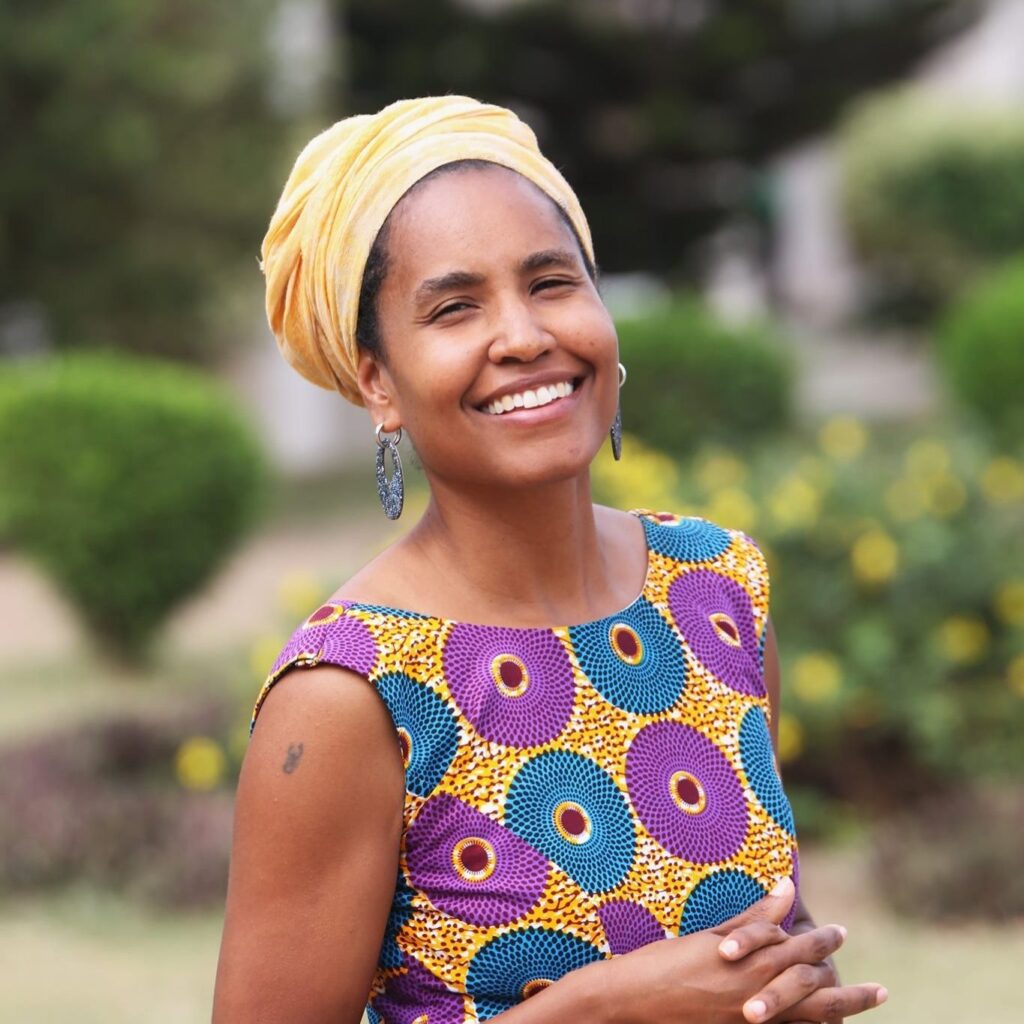
By Liesbeth Tjon-A-Meeuw
Lecturer Dr. Helen Akolgo-Azupogo (UDS)
Africana Development Studies block 3A, July 2025
This paper philosophises the on-going exploitation and land grabbing from indigenous communities around the globe. These violent practices have been taken place for centuries and its scale and duration could show us its deeper meaning. When we make a serious attempt to understand the spiritual dimension behind all the facts and the figures, we may shed new light on the dire state of earth, her custodians and eventually, also their and our salvation.
There is a verse in the old and new testament that could sum up the main point of this paper. In Psalm 37:11 we read “…the meek will inherit the land and enjoy great peace” and also in Matthew 5:5 we read “Blessed are the meek for they will inherit the earth” (Holy Bible, 2011). Usually, this verse is explained as an encouragement to be humble and gentle because eventually it will lead to a reward. Believers who submit will be blessed with peace and righteousness on earth. However, could this verse also have another meaning? Could it also speak about who these meek people actually are? I like to believe that ‘the meek’ in this verse refer to all the indigenous communities in the world and that, indeed, they will regain their lost lands.
The indigenous communities have been the safe keepers of the environment for countless generations. They are native to their ancestral home and for thousands of years they have learned to face nature’s challenges. They know how to cultivate land and they live according to natural and cosmic laws. They show great respect for other living creatures and they seem to be conscious of their vulnerable position in their environment. Their cultures exhibit the same close and sacred relationship with Mother Earth. Most indigenous cultures regard land as feminine for her qualities to birth, feed and nurture (Amodu, 2021). Earth is viewed as our spiritual Mother and its the natives who can hear and understand her voice. We can find this open-hearted approach to our existence among indigenous people in all continents.
When it comes to ownership of land they also have similar understandings. For example, among African natives land is viewed as a gift from God to exist and co-exist with other living creatures (Amodu, 2021). From the smallest to the biggest part, everything in nature is entitled to what the land has to offer in order to survive. It makes their relationship with earth sacred. Therefore, indigenous people in Africa approach land as property from rather the community instead of the individual. That community could be defined by family ties and other habitants of the hometown. A person from outside the social group could require a piece of land as long as the person is accepted by the community. Ghana is a good example where land belongs to the ancestors. Village heads and chiefs are standing in for them as the custodians of their burial ground (Aphu, 2015). In many indigenous cultures around the globe do we find traces of the same philosophy.
I believe that for this sacred and conscious connection with Mother Earth, indigenous people in particular are under attack in every corner of the world. They are willingly and purposefully targeted because of who they are, what they know and understand about earth. For many centuries now, they have been marginalised, muzzled and even murdered for their connection to nature. Major onslaughts come to mind, such as the native tribes in the Americas, the Khoi-san people in Southern Africa, the Aboriginals from Australia and the Tibetans in the region of China. But there are many more examples that are less known. They have all suffered under the pressure from central governments, military operations and big industries. Their humbleness, life philosophy and non-individual approach make them an easy target for control, exploitation and dominance.
From the outside it may look like these major cooperations and international companies only enter ancestral lands to confiscate them for their natural resources. Indeed, they come there to take minerals, bauxite, gas and oil out of the ground. Or they cut and burn the trees to plant many acres of cash crops and in the process they pollute the soil, air and the water bodies (Berry, 2017). For sure, these bad faith actors are driven by profit. But the fact that land grabbing, exploitation and pollution has been taken place for so long, in so many parts of the world with ever lasting consequences for the land’s custodians, makes one wonder if their is another agenda at play. Maybe even a hidden agenda in where the forces behind these polluters are aiming for the complete control and submission of Mother Earth? The best way to hit her is through her children, through the indigenous communities, who bleed together with their spiritual Mother. What if that is the actual aim behind the oppression and terrorisation of the natives with their lands worldwide?
We can talk about the ethnic nationalities of Myanmar that have faced violence and land dispossession for many decades now. Or we mention the indigenous territories in Columbia where the laws fail to protect the habitants. Then there are also the pastoralists and hunt-gatherers of Kenya who are up against corruption and commercialisation of their homelands. These case studies (Gilbert, 2017) may be far away from each other and involve multiple complex issues on legal, social-economical and ecological level. However, the playbook against the indigenous people are often the same; The post-modern society cannot accommodate to their needs. They can not rely on the good-will of the governments and are pushed aside by investors with power and money. The disastrous result is damage to their customs, their environment and its eco-system. We are witnessing no isolated incidents here, but a global crisis in land grabbing and a continuous process of disconnecting from Mother Earth.
In the academic field there is very little room for spiritual awareness. That is contrary to indigenous believe systems where all the answers are coming from the non-physical world. Maybe that is also how we should approach this land crisis. While academics, advocates and activists are fighting for the rights and protection of the indigenous communities, we should also pay attention to the underlying forces behind this systemic attack. Some native believers will feel the urge to confront these forces head to head in spiritual warfare. Others would like to focus on making the native communities stronger and less vulnerable for negative influences outside. Whatever is the case, the confiscators and polluters of ancestral lands won’t remain in power. In Psalm 37 we can read that God has promised to his followers that wicked men will eventually be cut off from the righteous men and their inherited land (Holy Bible, 2011).
The strength of the indigenous communities lies in their spiritual awareness. If they come and work together with other communities who face the same predicament, they can become stronger and build a protection shield around their homelands. It could become a shield on legal, economical and spiritual level. In their book ‘The Great Cosmic Mother’ the two authors speak about the old religion of the earth that was expressed by ancient civilisations around the world. There were many different expressions but they all understood and honoured the laws of Mother Earth. They explain that we should return to our spiritual Mother by ‘remembering, redefining and respelling’ her. The native communities should lead the way and show us how we, as fellow habitants on this planet, should stop trying ‘to control life and start listening to its music’ (Sjöö, 1987).
Bibliography
Amodu, Salish Ameh (2021) Land in African Ontology. Prince Abubakar Audu University: p2, 8-9
Aphu, E. S., Li Feng Jiang, & Adator, S. W. (2015). Land Tenure System in the Pre-Colonial Era. Ghana as the Insight. International Journal of African and Asian Studies, Vol.14: p89-91
Berry, Sara (2018) Who owns the land? Social relations and conflict over resources in Africa, GLOCON Working Paper, Nr. 7, Berlin: p6-8
Gilbert, J. (2017). Land Grabbing, Investments & Indigenous Peoples’ Rights to Land and Natural Resources: Case Studies and Legal Analysis. IWGIA: p15-30
Holy Bible (2011) New International Version, Biblica: p828-829, 1323
Sjöö, Monica and Barbara Mor (1987) The Great Cosmic Mother. Rediscovering the Religion of the Earth. Harper San Francisco: p236